Antonio Tejeda Encinas, lawyer | CEO, META Channel Corporation | President, Euro-American Committee of Digital Law – CEA Digital Law
Comparative analysis: regulation of deepfakes and manipulated content at the UN and in the European Union
UN documents and standards:
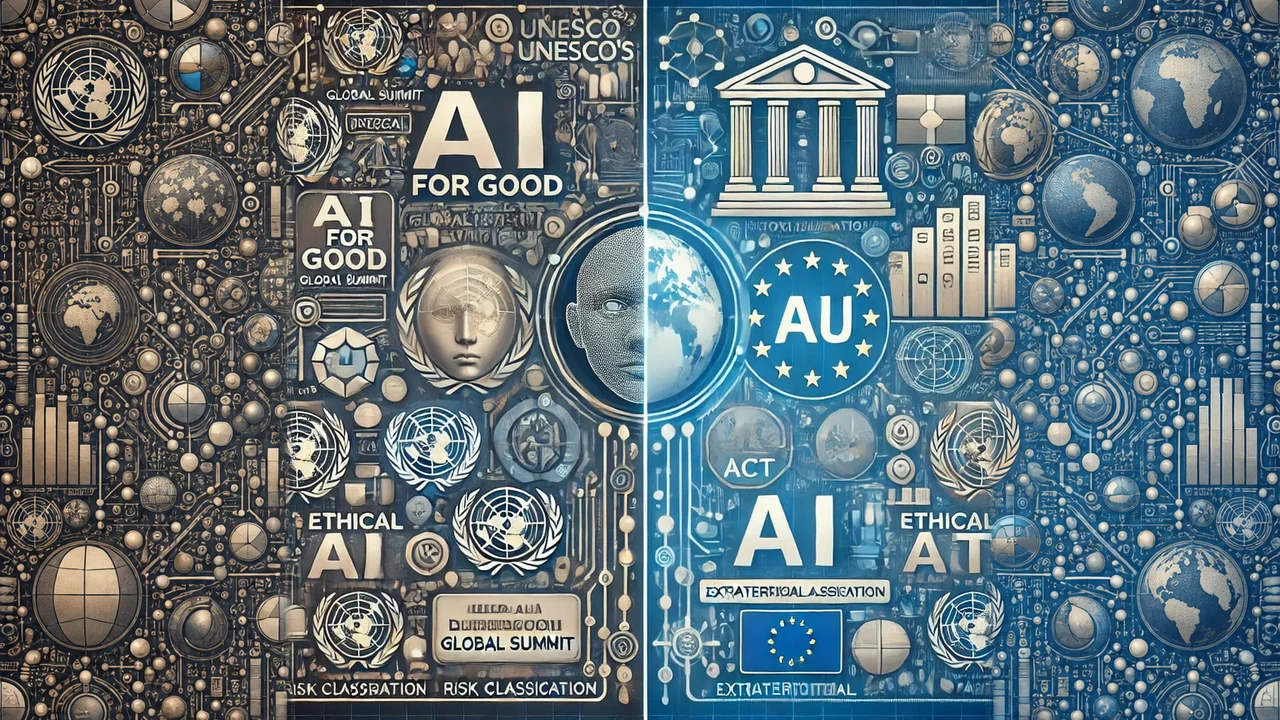
The UN has addressed deepfakes and disinformation through several documents and recommendations, most notably the report of the 2024 AI for Good Global Summit and UNESCO’s Recommendation on the Ethics of Artificial Intelligence, adopted in 2021 and updated in September 2024. The UNESCO Recommendation is the first global ethical framework applicable to its 194 member states, focusing on transparency and the protection of human rights against manipulated content and deepfakes.
The UN has also published the Guidelines for the Governance of Digital Platforms, with a specific focus on content moderation and the protection of freedom of expression. The guidelines seek to set standards on how manipulated information should be regulated, how harm to society can be avoided and how digital platforms can be made to operate transparently and responsibly.
On the technical side, the International Telecommunication Union (ITU) has published « AI Watermarking: A Watershed for Multimedia Authenticity », which sets out standards for the use of watermarking and deepfake detection technologies. The report, presented in May 2024, proposes technical solutions for tracing the provenance of AI-generated content and mitigating the risk of disinformation.
The European Union’s approach: the AI Act and the Code of Practice:
The European Union has opted for a more structured regulatory approach with the Artificial Intelligence Act (AI Act), which entered into force in August 2024. The regulation classifies AI systems according to their risk and lays down specific obligations for manipulated content and deepfakes. Deepfakes are not classified as high-risk, but they are subject to transparency obligations: providers must mark generated content so that it can be detected as artificial, and those who deploy deepfakes must disclose that the content has been artificially generated or manipulated.
The AI Act also bans certain uses outright, such as deepfakes used for political or social manipulation, treating them as « unacceptable risks » that cannot be permitted within the EU. In April 2025 the legislation will be complemented by the Code of Practice for providers of general-purpose AI (GPAI) models, which will provide ethical and technical guidelines for the development of these models, although adherence to it will be voluntary.
The extraterritorial reach of the AI Act:
Although the AI Act applies directly in the EU Member States, its extraterritorial reach has global implications. Any company outside the EU that wishes to operate in the European market or process the data of European citizens must comply with these rules. This means that companies in Latin America, the US and Asia will have to adapt to these standards if they want to offer services in Europe. The result is a domino effect, influencing how other regions and countries develop their own AI regulation.
Other international projects:
Other global governance efforts are under way internationally, such as the UN’s development of a Cybercrime Treaty, which seeks to create a legal framework to combat cybercrime and protect societies from the malicious use of deepfakes. Although the process has been controversial and has been criticised for a lack of consensus, it represents an effort to secure a binding global agreement.
A future of integrated rules:
The UN’s approach is based on global cooperation and the creation of technical and ethical standards applicable to all its members, ranging from ethics and digital governance to the technical detection of deepfakes. The European Union, for its part, is implementing a more specific and binding regulatory framework through its AI Act, which allows it to act quickly within its territory and set global precedents.
While the EU focuses on immediate implementation and the protection of fundamental rights, the UN offers a more holistic perspective that can be adapted to different contexts. Ultimately, cooperation between the two frameworks will be key to establishing a global standard that protects societies against the risks of deepfakes and other malicious uses of generative AI.