By Antonio Tejeda Encinas, President of CEA Digital Law (Euro-American Committee of Digital Law) and CEO of META Channel Corporation
In a digitalised, globalised world, companies face increasingly complex cyber threats that put at risk not only their operations but also their regulatory compliance and reputation. In 2025, challenges such as ransomware, advanced phishing and vulnerabilities in the Internet of Things (IoT) have made cybersecurity a strategic priority for medium-sized and large companies in Spain, across Europe and beyond.
Against this background, META Channel Corporation, the ‘operational arm’ of the research and academic committee CEA Digital Law (Euro-American Committee of Digital Law), offers comprehensive solutions combining legal, technological and strategic advisory services to help organisations protect themselves and comply with legislation such as the NIS2 Directive. This article looks at how these threats affect businesses and how META Channel positions itself as a key partner in meeting these challenges.
Regulatory context: From the NIS Directive to NIS2
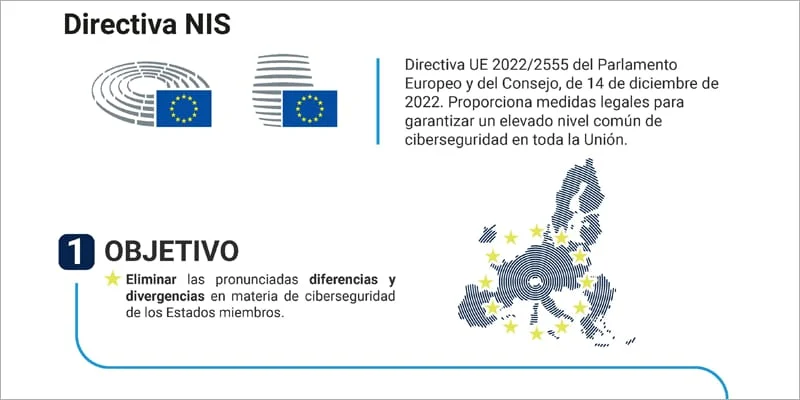
The NIS (Network and Information Security) Directive, adopted in 2016, was the first piece of EU legislation aimed at improving cybersecurity in key sectors such as energy, transport and healthcare. Although it was a significant step, the rapid evolution of digital threats has exposed its limitations, particularly the differences in how Member States implemented it. In response, the European Union adopted the NIS2 Directive in December 2022, which comes into force on 17 January 2025. This new framework strengthens cybersecurity requirements and extends its scope to more sectors, consolidating a common approach to improving cyber resilience across Europe.
Main cybersecurity challenges in 2025
1. Ransomware: Double extortion as a predominant strategy
Ransomware remains one of the biggest global threats, not only because it encrypts data but also because attackers threaten to publish it. In 2024, Spain recorded more than 120,000 incidents, mainly affecting critical sectors such as healthcare, transport and energy.
Regulatory impact: the NIS2 Directive requires companies to put in place data recovery systems, business continuity plans and prompt incident notification, thereby mitigating the damage caused by these attacks.
2. Advanced phishing: the evolution of social engineering
Using artificial intelligence, attackers have refined phishing, producing highly personalised messages and techniques such as smishing (malicious text messages) and vishing (fraudulent phone calls).
Required solutions: under NIS2, companies must strengthen access controls, implement multi-factor authentication and train their employees continuously to reduce the impact of the human factor.
3. Internet of Things (IoT): A gateway for attackers
The spread of IoT has increased connectivity, but it has also created new attack vectors. Devices such as security cameras, industrial sensors and other connected equipment are a weak point in company security.
Applicable rules: the NIS2 Directive requires companies to manage risk across their entire supply chain and to ensure that connected devices meet minimum security standards.
The NIS2 Directive: An essential framework for Europe
The NIS2 Directive lays down new rules to improve the security of network and information systems in essential and important sectors, strengthening the foundations of a resilient digital economy.
1. Wider scope: sectors such as telecommunications, postal services and public administration are now covered.
2. Stronger obligations: regular audits, risk management plans and incident response mechanisms are required.
3. Tougher penalties: fines can reach €10 million or 2% of total worldwide annual turnover.
4. Senior management accountability: business leaders must ensure compliance and face personal sanctions for negligence.
META Channel Corporation was founded as a bridge between companies in different regions of the world, including Europe, Latin America and the United States. Its mission is to help organisations comply with international regulations, protect their digital assets and strengthen their resilience against cyber threats.
1. International regulatory consulting: we interpret and apply legislation such as the NIS2 Directive, the GDPR and similar frameworks in Latin America and the US.
2. Cybersecurity audits: we identify vulnerabilities in systems, networks and connected devices and propose practical solutions.
3. Incident response plans: we design tailored protocols to minimise disruption and damage from attacks.
4. Cybersecurity training and culture: training for employees and managers in good practice and threat prevention.
5. Supply chain risk management: we assess the risks associated with suppliers and partners to ensure regulatory compliance.
META Channel Corporation does not work only with European companies; it also works with US and Latin American organisations interested in operating in Europe. Our multidisciplinary experience and network of international contacts allow us to offer comprehensive solutions adapted to any market.
- Global reach: we support regulatory compliance across multiple jurisdictions.
- End-to-end expertise: we combine legal, technological and strategic know-how.
- Tangible results: we offer practical and effective measures, guaranteeing results.
Cybersecurity in 2025 is not just a technical issue; it is a strategic and mandatory requirement. Against this backdrop, META Channel Corporation positions itself as the ideal ally to protect companies, ensure regulatory compliance and turn challenges into competitive advantages.