META Channel Corporation | TokenLab Division
In recent months, the tokenisation of real assets has become one of the most repeated narratives in the digital and financial ecosystem. Real estate, infrastructure, private debt and equity stakes in companies are starting to be offered in tokenised form with a seemingly simple promise: invest in real assets in a way that is accessible, digital and global.
The idea, in itself, is sound. Technology makes it possible to split investments into fractions, reduce operational friction and widen access to opportunities that were previously reserved for high-net-worth individuals or institutional investors.
But that is not where the problem lies. It arises when these assets are presented and distributed in environments originally designed for speculative cryptocurrencies, creating a quiet but significant confusion for the average investor.
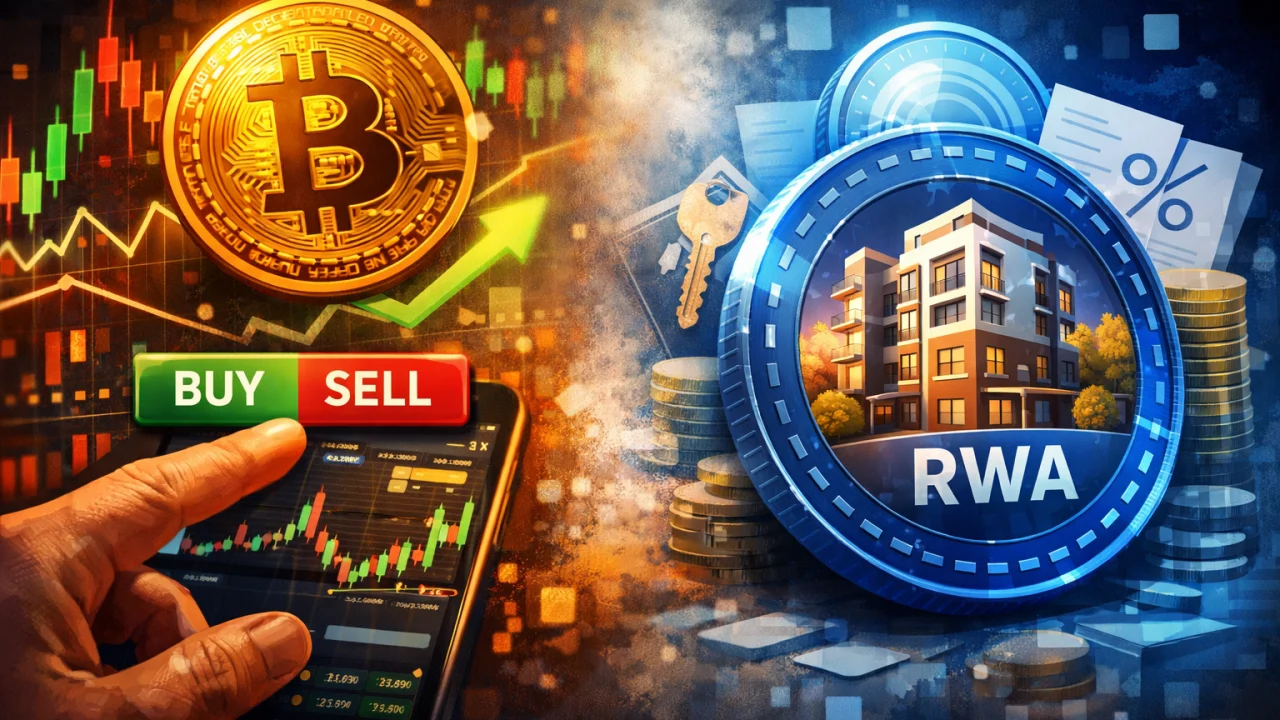
Today, on many digital platforms, a user can find cryptocurrencies, real estate tokens or tokenised financial assets under the same interface, with the same chart and exactly the same buy button. From a technological point of view, that may make sense. From an economic point of view, it does not.
A native cryptocurrency is driven by market dynamics and constant liquidity. Its price depends on trading and on immediate supply and demand. A real-world asset works differently: it generates value over time, through returns, economic exploitation or predictable financial flows. It is not designed to be bought and sold continuously. However, when both are acquired in the same way, the environment conveys an implicit message: that both will behave in the same way. That is where misinformation begins, even if no one directly intends to mislead.
Investors do not usually read complex legal structures or technical tokenisation standards. They interpret what they see. If the buying experience is identical, so will the expectation be. Many users believe they are buying into an asset with immediate liquidity when in reality they are accessing an investment with time horizons, restrictions or dynamics typical of traditional capital markets.
It is not a failure of technology. Nor necessarily of the asset. It is a mismatch between product and distribution channel.
Tokenisation did not come along to turn real assets into cryptocurrencies. It came to digitise the financial market. And financial markets have always operated on a basic premise: different assets require different explanations, and clear expectations from the outset.
The sector is going through a natural phase of transition. Technological infrastructure has advanced faster than user understanding and faster than the rules of product presentation and differentiation. The result is an ecosystem where innovation and confusion temporarily coexist.
That is why the relevant debate today is not whether tokenisation works. It does. The real debate is how it is presented to investors and what they actually understand when they press “buy”.
At META Channel Corporation, through our TokenLab division, we see this moment as an inevitable stage in the maturing of the market. Tokenisation represents a significant evolution in the way real assets are structured and accessed, but its consolidation will depend on something simpler than technology: clarity.
Innovation is not just about creating new financial instruments, but about ensuring that those who use them fully understand what they are getting into, how the asset works and what they can expect from it. Because trust is not born of digitalisation. It is born of understanding. And in the new tokenised economy, understanding will always be the best investor protection.