Tenerife as a technology innovation hub: opportunities, challenges and keys to success, from the perspective of Euro-American Committee of Digital Law – CEA Digital Law and META Channel Corporation
By Antonio Tejeda Encinas, President of the Euro-American Committee of Digital Law – CEA Digital Law and CEO of META Channel Corporation
The recent news that Tenerife could become a destination for investment by tech giants such as Huawei and Samsung marks a turning point in the island’s economic history. However, for these initiatives to move beyond the stage of preliminary meetings and become a reality, an in-depth analysis is needed of both the competitive advantages and the structural limitations that Tenerife faces. As President of the Euro-American Committee of Digital Law – CEA Digital Law and CEO of META Channel Corporation, I can draw on my experience in both academic research and business to offer a comprehensive, strategic view of this issue.
Tenerife’s geographical location offers an undeniable advantage: its position as a natural link between Europe, Africa and the Americas. This geopolitical position allows the island to aspire to become a strategic node for technological innovation and business development. For Huawei and Samsung, which are seeking to strengthen their global presence, Tenerife could offer a unique gateway to emerging markets in Africa and an ideal base for coordinating transatlantic operations.
However, this advantage could be overshadowed unless certain challenges inherent in being an island are addressed effectively, such as limited air connectivity and the high logistics costs of transporting goods and technological equipment. For example, the limited number of direct flights from Tenerife to global technology centres such as Silicon Valley, Seoul or Shenzhen could become a real obstacle to the movement of executives, technicians and materials. This affects not only investment potential but also how international companies perceive the island’s operational viability.
At Euro-American Committee of Digital Law – CEA Digital Law, we have repeatedly stressed that sustainable technological development requires advanced infrastructure that ensures competitiveness in the global market. While Tenerife has taken important steps in digitalisation, the demands of giants such as Huawei and Samsung go far beyond the basics. These companies need state-of-the-art telecommunications networks, internationally certified data centres and cybersecurity systems that comply with the European Union’s strict rules, such as the General Data Protection Regulation (GDPR).
A concrete example of this need is the growing demand for local data processing due to the GDPR’s restrictions on cross-border transfers. For a company such as Huawei, which develops artificial intelligence and mass storage technologies, the lack of local data centres in Tenerife could be a reason to reconsider its interest in the island. In addition, submarine connectivity, which is key to fast and secure global communications, needs to be expanded. With its position in the Atlantic, Tenerife has the potential to become a key node connecting continents, but this requires significant investment in state-of-the-art submarine cables that guarantee both speed and redundancy.
Local talent: unfinished business
Human talent is the most valuable resource in technology, and this is where Tenerife faces a critical challenge. Although the island has universities and training centres producing professionals in fields such as computer science and engineering, what is currently on offer is not aligned with the specific needs of high-tech companies. This mismatch between educational supply and business demand could hold back strategic investment.
At META Channel Corporation, we have worked in other markets designing training programmes in collaboration with universities and companies. One viable solution for Tenerife would be to introduce dual training models, in which students combine their academic studies with paid work placements at technology companies. The island also needs to position itself as an attractive destination for international talent. This means addressing key issues such as housing quality, schooling for expatriate families and cultural integration. For example, cities such as Dublin (where our registered office is) and Tallinn have attracted thousands of international tech workers thanks to a combination of employment incentives and robust social infrastructure. Tenerife could aim for a similar model, adapted to its specific circumstances as an island.
Housing and overcrowding: a structural obstacle
One of the least discussed but most important issues is the housing crisis affecting Tenerife. Mass tourism and the limited supply of affordable housing could become an obstacle for those who do not work remotely and need to be on site. Technology companies need to ensure that their employees have access to suitable, affordable housing. Otherwise, the island’s appeal as an investment destination could quickly fade.
For example, in markets such as San Francisco, the lack of affordable housing has led many technology companies to look for alternatives in other cities. If Tenerife does not act proactively, it risks repeating this mistake. One solution could be to create incentives for sustainable housing developments aimed at technology professionals, combined with policies to curb property speculation.
Tax incentives: an attractive framework, but one that could be improved
The Canary Islands Economic and Fiscal Regime (REF) is undoubtedly a major attraction for foreign companies. However, in a global environment where many jurisdictions offer advantageous tax conditions, Tenerife needs to go further. In addition to tax exemptions, it would be useful to introduce specific grant programmes for research and development (R&D) projects and to make it easier for local startups that can join the value chain of companies such as Huawei and Samsung to access financing.
A practical example of success in this area is the Irish model, which combines a low corporation tax rate with strong state support for innovation. Tenerife could learn from this approach, adapting it to EU rules and to the island’s specific needs.
Sustainability: green technology for a responsible future
Sustainability must be a central pillar of any technology development strategy in Tenerife. As we have pointed out at Euro-American Committee of Digital Law – CEA Digital Law, striking a balance between economic development and environmental protection is not optional but essential. This is especially true in an island setting such as Tenerife, where resources are limited and the pressure on the environment is significant.
Technology investment must be aligned with sustainable practices, such as using renewable energy to power technology infrastructure and adopting circular economy models that reduce waste. Huawei and Samsung, for example, could lead green technology projects on the island, showing that technological development and sustainability can go hand in hand.
Limited international connectivity. Beyond digital connectivity, Tenerife suffers from insufficient physical connectivity. Without regular direct flights to technology hubs such as San Francisco, Berlin or Singapore, attracting talent and maintaining business relationships becomes more difficult. Other islands in the Mediterranean already face this problem, and the lack of connectivity has reduced global technology companies’ interest in them.
Lack of a consolidated technology ecosystem. Tenerife currently lacks an ecosystem that fosters collaboration between startups, universities and large corporations. In places such as Barcelona, the creation of technology hubs has been key to attracting investment and generating innovation. Tenerife needs to commit to creating physical and virtual spaces where these interactions can flourish.
Insufficient international promotion. Although the meetings with Huawei and Samsung are a good start, Tenerife needs to develop a broader global marketing strategy. This means taking part in international events, opening representative offices in key markets and running campaigns that position the island as an innovative and sustainable technology destination. A successful example of this strategy is Lisbon, which has positioned itself as an emerging technology hub thanks to its active participation in international trade fairs and conferences, as well as an attractive tax framework and a high quality of life.
Preparing for the arrival of large multinationals. It is not enough to attract companies of the calibre of Huawei or Samsung; it is crucial to ensure that their arrival does not create social or economic imbalances. This ranges from managing the impact on the local labour market to developing urban planning policies that prevent gentrification and social exclusion. Seattle’s experience with Amazon, for example, shows how the arrival of large corporations, if not properly managed, can lead to problems such as a rising cost of living and the displacement of local residents.
The arrival of Huawei and Samsung in Tenerife could be the catalyst that turns the island into a global benchmark for technological innovation. However, for this vision to materialise, it is essential to tackle the challenges we have identified proactively and to make the most of the unique opportunities that Tenerife can offer.
At Euro-American Committee of Digital Law – CEA Digital Law, we will continue working to ensure that the technology investment coming to Tenerife meets the highest standards of sustainability, competitiveness and regulatory compliance. At META Channel Corporation, for our part, we will continue to promote collaboration between international and local companies, helping to build a technology ecosystem that benefits both Tenerife and the rest of Europe.
This is a historic moment for Tenerife, but success will not come automatically. It requires strategic vision, effective leadership and an unwavering commitment to sustainable development and the well-being of the local community. If we can bring these pieces together, Tenerife will become not only a destination for technology investment but also an example for other regions of the world seeking to balance economic development, innovation and sustainability.
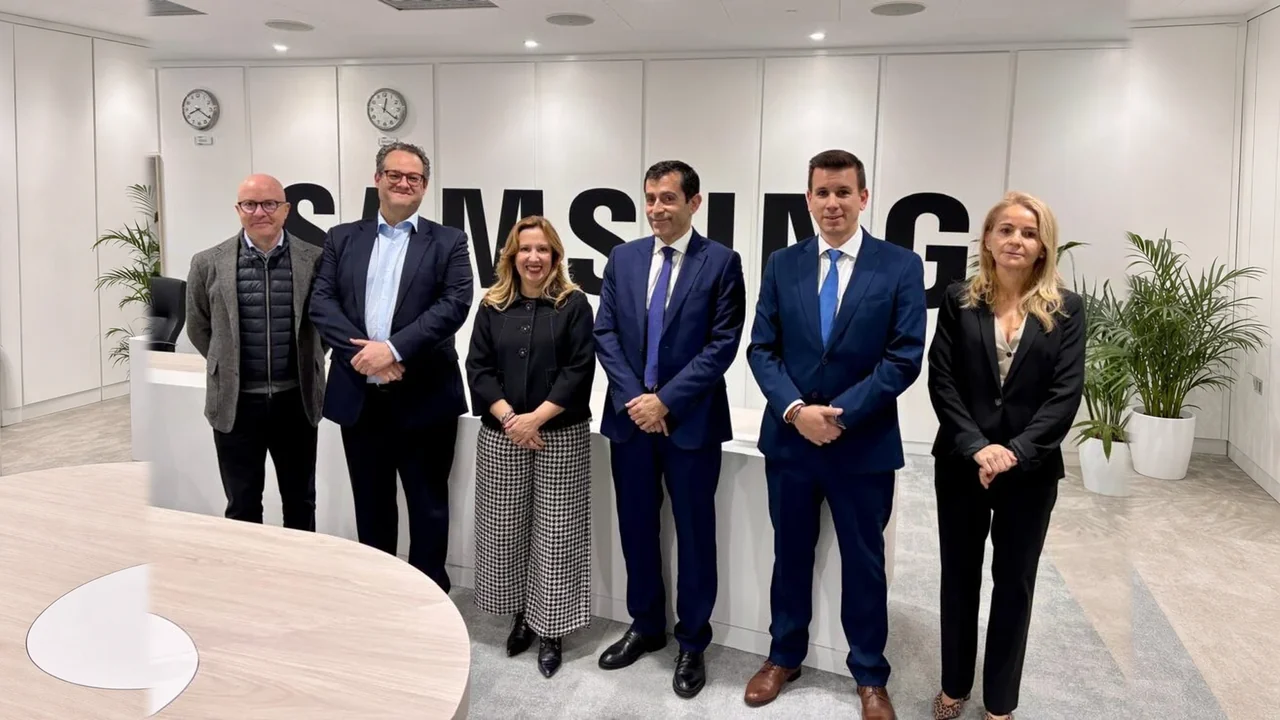
Photo:
Meeting with the senior management of Samsung Spain. Credit: Cabildo de Tenerife.